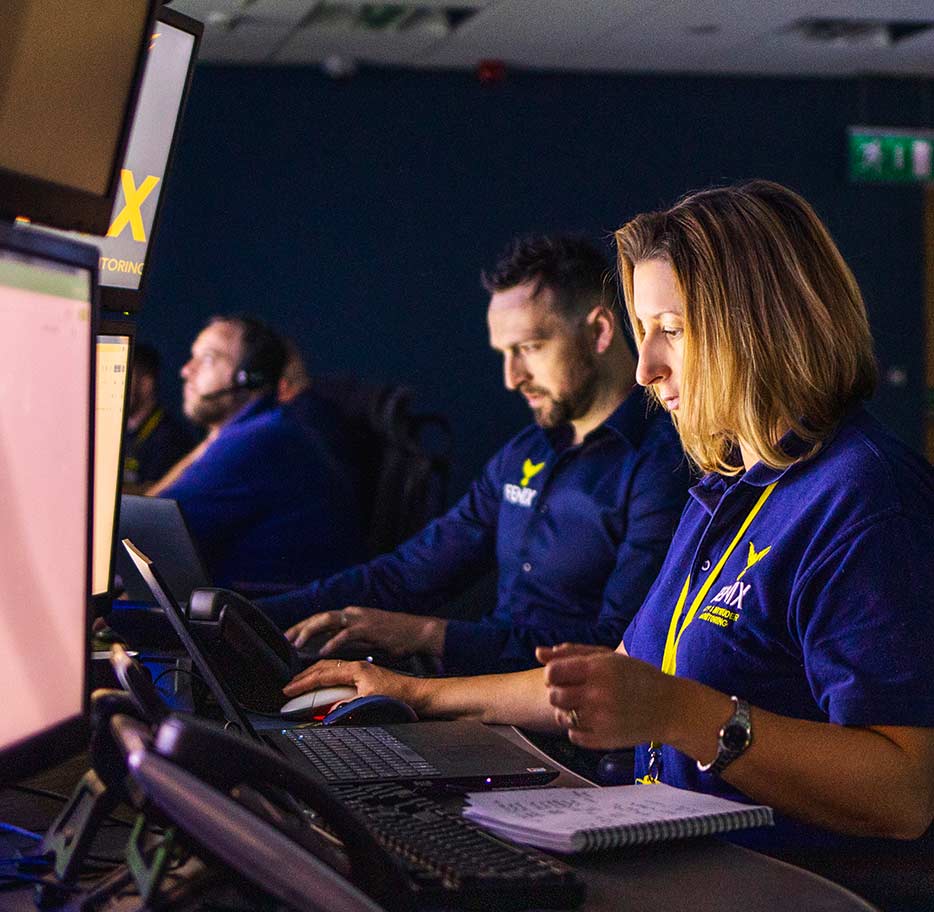
The security industry is undergoing a fundamental shift, driven by data, artificial intelligence and rising expectations of accountability – a shift that is giving rise to ARC intelligence hubs at the heart of professional security. In this environment, professional security is no longer defined by individual technologies or traditional models alone, but by how effectively people, systems and physical presence are integrated to predict emerging trends, prevent risks and unlock new value in a changing security landscape.
Drawing on experience within an Alarm Receiving Centre (ARC), it is clear that traditional reactive monitoring models must evolve. ARCs are uniquely positioned to develop from alarm-handling environments into genuine hubs of data analysis and predictive intelligence.
Modern security systems generate vast streams of information from alarms, CCTV and video monitoring intelligence, access control and AI-enabled tools. When analysed effectively, this data becomes a strategic asset: supporting improved risk mitigation, increased operational productivity and the development of new, intelligence-led services.
Technology excels at detecting anomalies, correlating events and identifying patterns at scale. AI enhances this capability by prioritising risk and surfacing insight that would otherwise remain hidden.

However, data and automation alone do not deliver outcomes. Context, intent and consequence still require human interpretation. These responsibilities sit with trained professionals operating to recognised standards, ensuring decisions remain ethical, proportionate and accountable.
The evolution of ARC intelligence hubs depends on a human-led analytical model. Skilled operators must be empowered not only to respond, but to interpret trends, anticipate emerging risks and provide informed guidance to clients and partners. Predictive analysis enables a shift from reactive response to proactive prevention, while also creating opportunities to deliver higher-value services that extend beyond traditional monitoring.
Physical security providers remain a critical piece of the overall security framework. Traditional guarding and patrol models continue to deliver deterrence and reassurance, but must evolve alongside data-driven intelligence. When officers are connected into analytical and monitoring environments, informed by real-time and predictive insights, their effectiveness and productivity are significantly enhanced. Their observations feed back into the intelligence cycle, strengthening analysis and improving future outcomes.
This integrated approach reflects BSIA principles of professionalism, competence and continuous improvement, and aligns with the Fenix Monitoring philosophy that innovation must serve outcomes, not replace people. Historic security practices and advanced technology must evolve together, each strengthening the other.
The opportunity for the industry is clear. Those who invest in data capability, governance and skills will not only mitigate risk more effectively, but will define new services, new standards and new sources of value in a rapidly evolving market.
Professional security protects our world by turning data into insight, insight into action, and intelligence into opportunity.
AI may inform the decision, but for the time being, humans own it.
Originally published by our MD, Carl Meason, in the BSIA Connect Spring 2026 magazine